
Before we begin, don't forget to subscribe to my YouTube channel HERE . It will be a great motivation for me to continue creating more engaging content. Thank you for your support.
Saitama is the 5th most populous prefecture in Japan, located north of Tokyo and is one of the 7 prefectures and cities in the Kanto region of Japan. Kawagoe (川越市) is a city in Saitama Prefecture, known as “Little Edo” (小江戸) with many ancient architectural works, up to thousands of years old, and only 30 minutes by train from central Tokyo.
Today, I’ll take you on a tour around Kawagoe to explore all the must-see spots in this charming city, perfect for a one-day trip!


First, head to Kawagoe Station, which is just about a 30-minute train ride from Ikebukuro Station.
Address: https://goo.gl/maps/AvRYyV4R8aPsHku78
- Kawagoe Hachimangu Shrine
Address: https://goo.gl/maps/YhJkhFMSp9SZbTUM7
This is a shrine that was built about 1000 years ago, is the most prominent shrine, and is the only shrine with “Kawagoe” in its name among the more than 200 shrines in Kawagoe.
It’s only about a 5-minute walk from Kawagoe Station to the temple, making it the perfect first destination for today’s journey.

People visit this temple to pray for better relationships, making it especially popular among couples in love and married couples seeking harmony and happiness.


The entrance to the temple is beautifully decorated, with fences and red lanterns on both sides, creating a welcoming and picturesque atmosphere.


At this temple, there is a special shrine called **Guchi kiki-sa ma**, which features a statue of a man raising his hand to his ear, symbolizing a desire to listen to others, promoting better communication and understanding in relationships.

Guchi kiki-sama represents Prince Shotoku, a revered figure in Japanese history known for his compassion and efforts to listen to and assist those who were suffering.

Next, we visit the Inari Shrine, dedicated to the Soul God Kuraine, a deity believed to bring bountiful crops and prosperous business.

Inari Shrine.


2. Kurazukuri no Machinami / Warehouse District
Address: https://goo.gl/maps/xtTpKJGgW4QF4ghx8
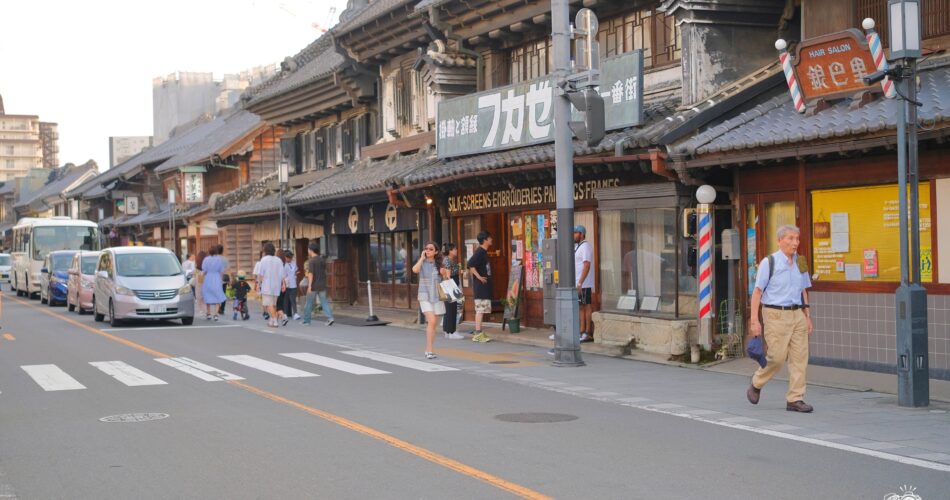
Kurazukuri in Japanese refers to warehouse-style buildings with clay walls, built in the Edo architectural style. This street offers a nostalgic glimpse into the past, showcasing the traditional scenes from the Edo period (1603-1867).

In the past, Kawagoe was a crucial trading town that supplied resources to Edo (now Tokyo). Thanks to their prosperous businesses, Kawagoe merchants showcased their wealth by building beautiful warehouses and shops using fireproof materials.


This street is about 300-400 meters long and is lined with shops offering a mix of food, souvenirs, and handicrafts, ranging from traditional to modern styles.

There are also rickshaws available here, offering a unique way to take a tour around the charming streets of Kawagoe.

A Miffy store on the street that I visited:


The shop sells delicious cakes and super cute kitchen utensils, making it a delightful stop for both food lovers and those looking for unique items.

Miffy store Kawagoe address: https://goo.gl/maps/H2hYkezjuCTsDkNv8


Miffy bread and jam.

There is also Donguri Store here like Kyoto.
Address: https://goo.gl/maps/SZxP1s5DMCjwsfDcA

3. Toki no Kane Bell Tower.
This bell tower is located right at the beginning of a curve on Kurazukuri Street, making it very easy to spot.
Address: https://goo.gl/maps/hrQjGWVh7wXHUJdz5
This bell tower stands about 16 meters high and was built during the early Edo period, around 400 years ago. It rings four times a day: at 6 AM, 12 noon, 3 PM, and 6 PM, with each time frame producing a distinct sound.

The tower is located on Kanetsuki-dori Street, a bustling area similar to Kurazukuri Street, lined with dozens of restaurants.

At the foot of this bell tower is the Yakushi shrine, dedicated to the Medicine Buddha (Yakushi Nyorai) – bringing good harvests, family happiness, cures from diseases, and especially eye diseases. And the Inari shrine on the right is said to bring success in life, luck, especially in exams.

One of Kawagoe's most famous specialties is sweet potatoes. Along Kanetsuki-dori Street, you'll find many shops selling a variety of sweet potato-related dishes, offering a delicious taste of the local flavor.


Đặc biệt hơn, ở đây còn bán cả kem khoai lang nữa ! Một món mà chắc chỉ Kawagoe mới có .


You absolutely must try the sweet potato ice cream when you visit here!
In addition, on this street there is also a very old-fashioned "when in Rome, do as the Romans do" version of Star Bucks :v

Address for you to find easily: https://goo.gl/maps/UCrx1PwCg7EosKzWA


Nhớ thử StarBucks khoai lang tại đây nhé .


Đây là con phố mà mình thích nhất tại Kawagoe, vừa có khung cảnh cổ xưa của Nhật Bản, vừa có nhiều món ăn ngon nữa .
4. Kashiya Yokocho
Address: https://goo.gl/maps/CXNgY1FGVYD2QPJ27
This street is lined with shops selling traditional sweets and is just 350 meters from Toki no Kane, about a 5-10 minute walk away.
There is a famous type of bread sold here, called “Fugashi”, a type of bread that is 85-90cm long and is covered with a layer of brown sugar, giving the bread a slightly sweet taste.

Fugashi in Kawagoe is considered the longest bread in Japan. People who come here often buy “Fu” as a gift (Omiyage). If you have a chance to come here, remember to buy some to try, and buy more for your relatives!

As we walk towards Kashiya Yokocho, we can also easily spot giant animal statues along the way, adding a fun and whimsical touch to the area.


Some lovely pictures I took while walking through here:


Special manhole covers at Kawagoe.
5. Honmaru Goten (Kawagoe Castle)
Address: https://goo.gl/maps/MMUcTCvmQRsV3DhAA
Kawagoe Castle is said to have been built in the first year of Nagaroku (1457), and was considered an important defense line in northern Edo. And Honmaru Palace is the only remaining building of the former Kawagoe Castle, which also served as the residence and office of the lord in ancient times. (Source: Japan-guide )
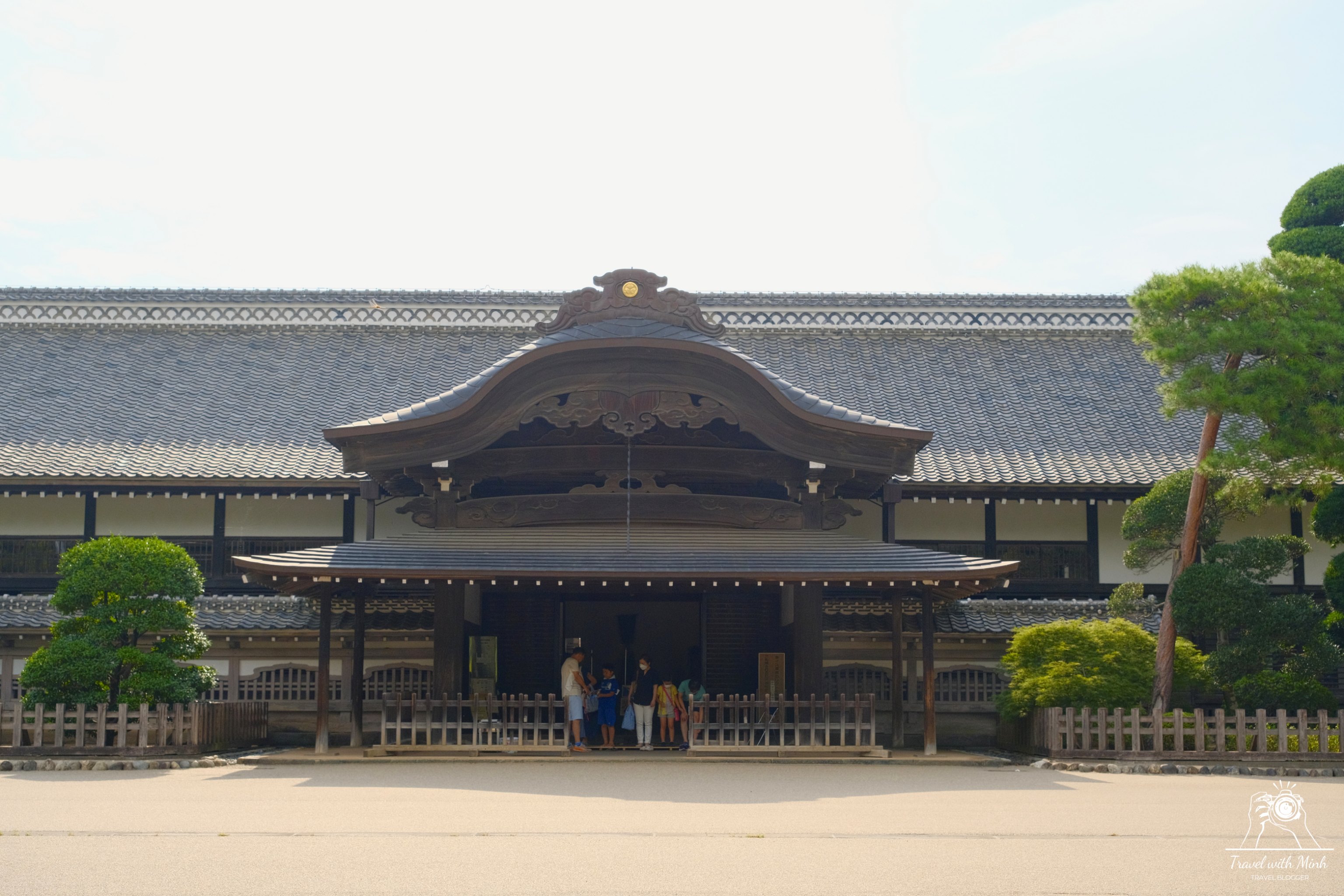

Tickets to visit this palace are just 100 JPY (around 16k VND) for adults. Before entering, be sure to leave your shoes on the shelf to the left of the door.


The entire interior of the castle is made of wood, with some areas featuring traditional tatami floors, adding to its authentic Japanese charm.


Inside the room, you'll find ancient decor, while outside, there's a spacious garden that offers a peaceful and scenic view.


There are some truly beautiful angles to be captured through the windows here, offering a perfect blend of architecture and nature.


It feels quite reminiscent of generals discussing strategy, with the space and atmosphere adding a sense of historical significance.


Honmaru Castle opening hours: 9am – 5pm.
Closing hours: Every Monday (if Monday is a holiday, the castle will be closed on Tuesday), the fourth Wednesday of each month, and during the end of the year and New Year (from December 4th to January 12th).
6. Kawagoe Hikawa Shrine
Address: https://goo.gl/maps/S2qwA6cdN9Pj3UWf8
The entrance to this temple features a 15-meter-high Torii gate, one of the tallest wooden Torii gates in Japan.

Kawagoe Hikawa Shrine was built 1,500 years ago and is designated as an important cultural property by the prefectural government. The shrine enshrines five deities from the same family, including two couples, who are believed to bless and connect family and marriage. (Source: Fun-Japan )


Pinwheel with blue sky.
Here, people can experience “fishing” for fish, and inside is an omikuji (おみくじ) fortune-telling slip.

Kawagoe Hikawa Shrine also has a “tunnel” filled with wooden plaques with people's wishes written on them.


In the summer (from July to September each year), the temple hosts a wind chimes festival, where thousands of colorful wind chimes are hung, creating a beautiful and serene atmosphere.

People write their wishes on wooden plaques and hang them on the wind chimes, hoping that their wishes will come true.

And to end the article, here are a few pictures I took of the kimono with the wind chimes at this temple:


Cảm ơn vì đã đọc đến cuối bài viết .
***************************************************************************************************************
Explore our useful services in Japan:
- Taking photos of individuals, couples, and families in Osaka, Kyoto, Nara: See more HERE
- Plan and schedule your trip to Japan: See more HERE
- eSim data, pocket wifi travel in Japan: See more HERE
***************************************************************************************************************
*** Please read the Copyright & Collaboration requirements carefully before copying or quoting the blog's content and images. Thank you.

Does this journey excite you?
If you found this blog article helpful, a cup of coffee from you would be a great boost for my next adventures.
Buy me a coffee